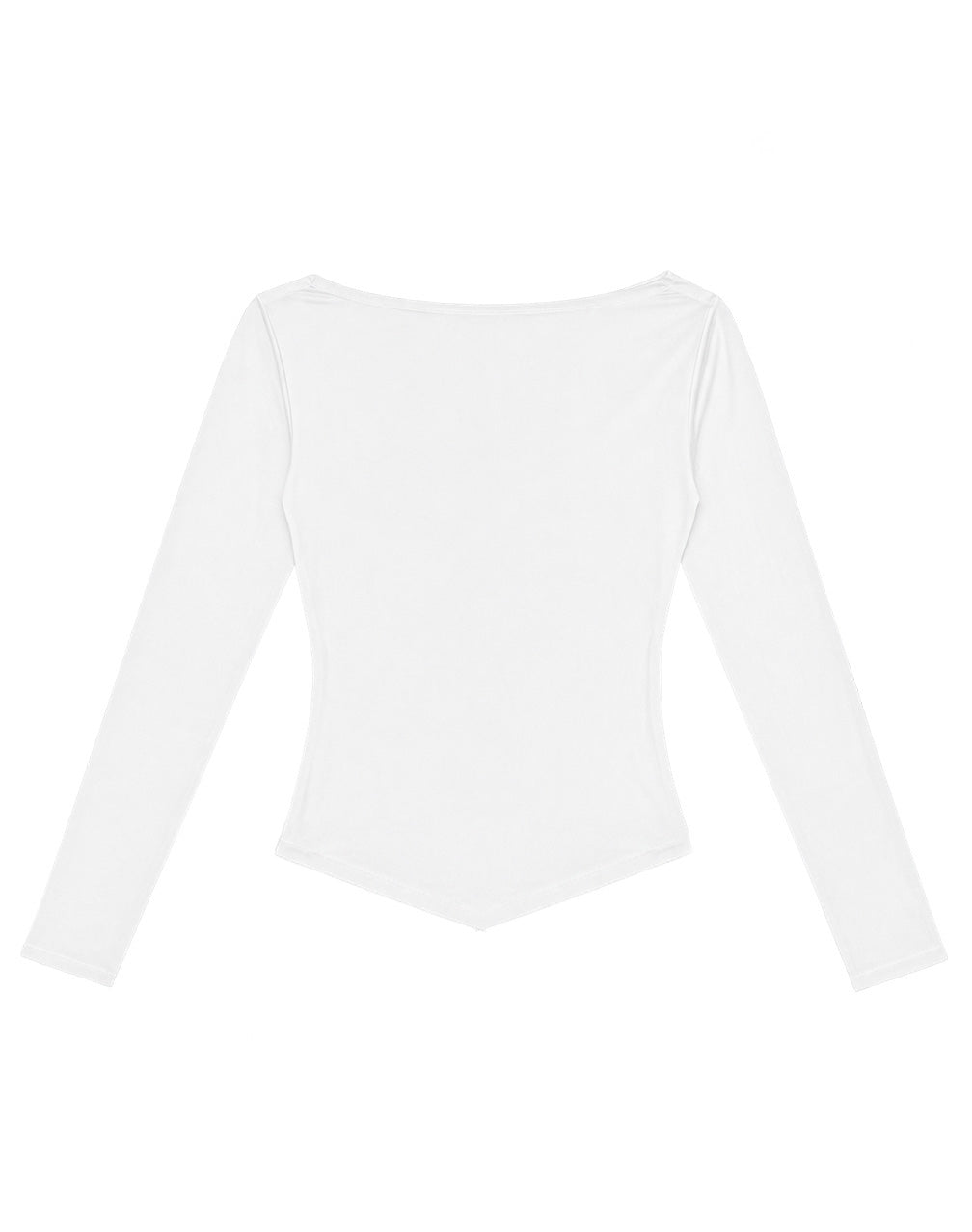
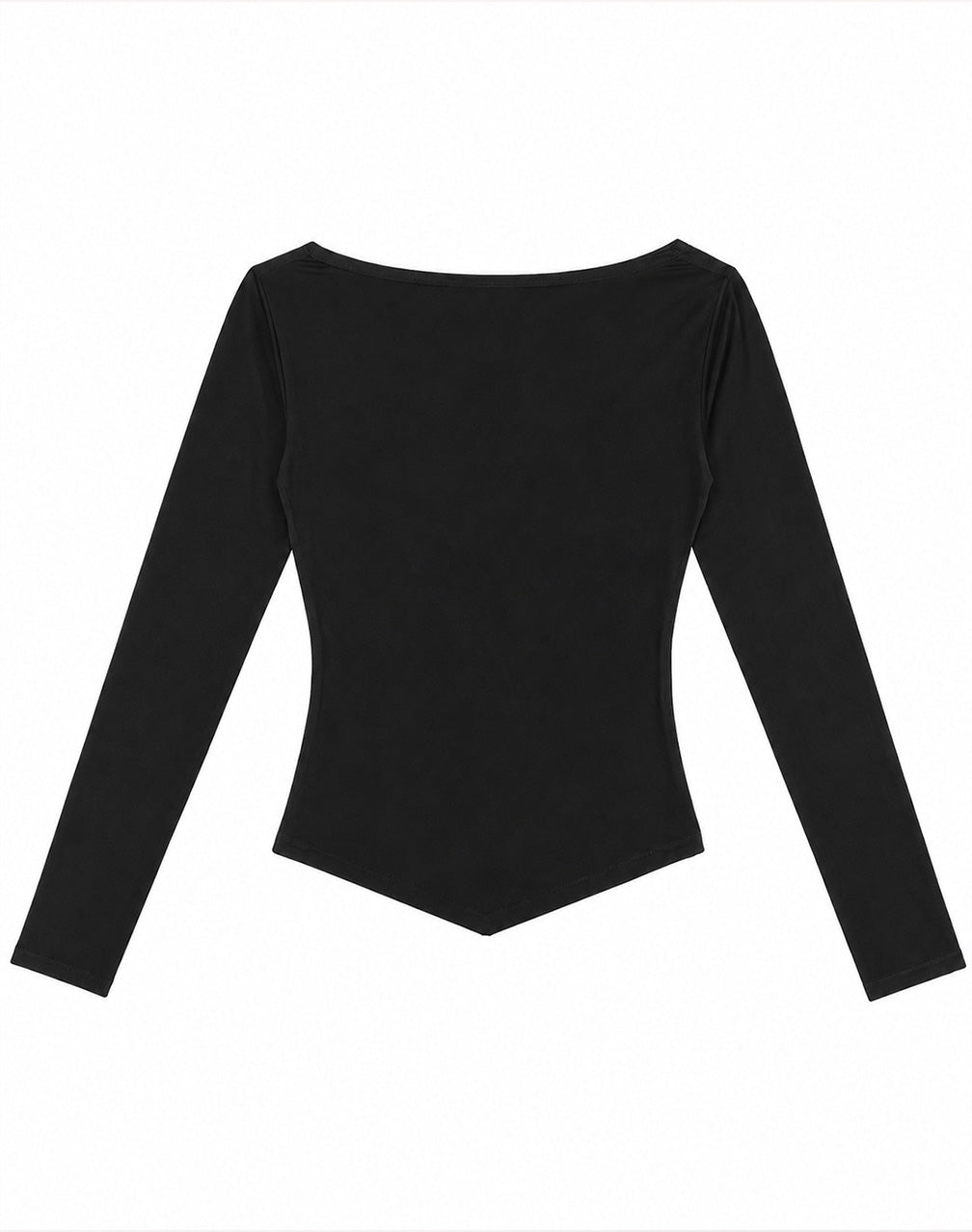
The V Line top - Chalk
Couldn't load pickup availability
The V Line Top is a long sleeve designed with an asymmetric hem that falls into a subtle V through the front. Cut close to the body with a clean crew neckline and elongated sleeves for a minimal, flattering silhouette.
An elevated everyday basic designed to pair with low-rise silhouettes.
SIZE GUIDE
SIZE GUIDE

FABRIC FOOTPRINT
FABRIC FOOTPRINT
Fibre Content
95% Cotton, 5% Elastane
Pros
Predominantly natural fibre – cotton makes up the majority of the fabric, providing a soft, breathable and comfortable base.
Breathable and comfortable – cotton allows air to circulate and absorbs moisture, helping the garment feel comfortable against the skin.
Added stretch and flexibility – the 5% elastane provides additional stretch, allowing the garment to move with the body and creating a more comfortable, flexible fit.
Improved shape retention – elastane helps the fabric recover after stretching, allowing the garment to maintain its shape through regular wear.
Soft and durable – cotton provides a naturally soft hand feel while offering good durability for everyday garments.
Easy to care for – cotton and elastane blends are generally practical to wash and maintain, making them well suited to everyday wear.
Cons
Contains a synthetic fibre – elastane is a petroleum-based synthetic fibre and is not biodegradable.
Less biodegradable than pure cotton – while cotton is biodegradable under appropriate conditions, the addition of elastane means the complete fabric will not biodegrade in the same way as 100% natural fibre.
May crease – the high cotton content means the fabric can still wrinkle more readily than predominantly synthetic fabrics.
Water and agricultural impact – conventionally grown cotton can require significant water and may involve pesticides, fertilisers and intensive land use depending on how and where it is grown.
More difficult to recycle – blending natural cotton with synthetic elastane can make textile-to-textile recycling more challenging than with a single-fibre fabric.